
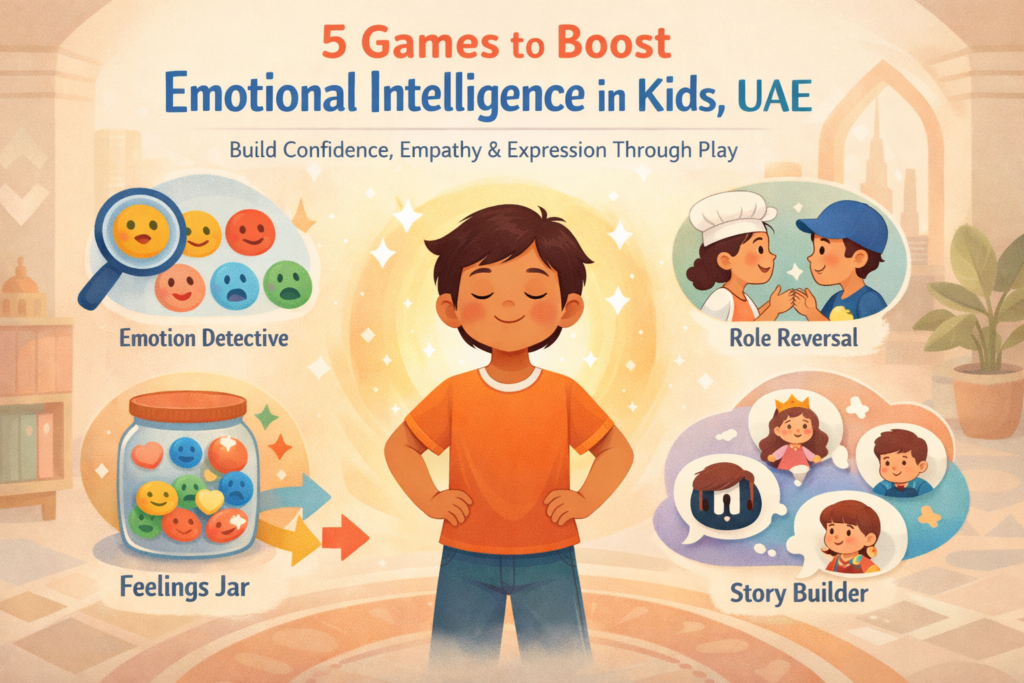
- emotional intelligence in Kids, UAE 🔻
Three years ago, at a regional science fair in Bangalore, I met a 12-year-old who had built an impressive robotics project. She had aced her research, her coding was sharp, and her parents were beaming with pride. But when it was time for her to present, her words tumbled out in a nervous rush, and she struggled to answer simple questions. Afterward, her father shared a quiet insight: “She’s brilliant technically, but dealing with the spotlight? That’s her biggest hurdle.” It hit me, skills are just part of the game; navigating pressure and emotions is where the real challenge lies.
That moment exposed a hard truth many busy Dubai parents face: “We are building intelligent children, but not always emotionally strong ones.”
In an AI-first, fast-paced world, confidence doesn’t come from marks or medals. It comes from emotional intelligence in Kids, UAE. EQ is the ability to understand feelings, manage stress, express thoughts, and stay grounded under pressure.
The good news is you don’t need more screen time, tutors, or pressure. You need the right games.
Let us dive into how to build EQ in your kid.
What Is Emotional Intelligence (EQ)?
EQ is not about being emotional. It’s about being aware, regulated, and expressive.
For children, EQ means:
- Recognizing their emotions
- Managing frustration and anxiety
- Communicating feelings clearly
- Showing empathy
- Building confidence in kids, UAE in social situations
In simple terms, EQ is the skill that helps kids stay calm, speak up, and bounce back.
And here’s the surprising truth: most parents don’t hear: EQ is built faster through play than through lectures. Especially for children.
5 Games That Will Encourage Emotional Intelligence in Kids, UAE
EQ shapes resilience and empathy. Drawing from psychology, the following 5 playful games may help kids recognize feelings, manage emotions, and connect better with others:
Game 1: Emotion Detective
Most kids feel emotions but don’t identify them. This game builds emotional awareness which is the foundation of confidence.
How to play it:
Sit with your child and name a situation:
- “Your friend didn’t invite you to play.”
- “You lost a game.”
- “You were praised in class.”
And then ask:
- What emotion would you feel?
- Why?
- What could you do next?
It builds self-awareness and needs just 5–10 minutes a day.
Game 2: Role Reversal
The play flips power and builds empathy, which is crucial for building emotional intelligence in Kids, UAE. Children begin to understand perspectives beyond their own.
How to play it:
You act like the child, and your child acts like the parent, teacher, or friend.
Let them:
- Correct you
- Comfort you
- Guide you
In multicultural cities like Dubai, this is a critical life skill. It builds empathy & communication skills in kids. And you don’t have to invest your hours; you just need 20-25 minutes.
Game 3: The Feelings Jar
This game assists children in learning that emotions are normal, not weaknesses. And when it normalizes, anxiety reduces, and confidence in kids, UAE increases.
How to play it:
Keep a jar with emotion slips: happy, angry, nervous, proud, jealous, or scared.
Each evening:
- Pick one slip
- Share a moment from the day linked to that emotion
Parents must go first.
This game develops emotional intelligence in Kids, UAE, through building expression & trust, and needs 5 minutes daily.
Game 4: Pause & Choose
Confidence in kids, UAE isn’t about never failing. It’s about responding well under pressure. This game trains emotional regulation, the skill most kids lack on stage or in class.
How to play it:
Create hypothetical situations like:
- “Someone laughs at you.”
- “You forget your lines.”
- “You lose a competition.”
And ask:
- What are three possible reactions?
- Which is the best choice?
- Why?
This game builds self-control & decision-making and needs 10 minutes.
Game 5: Story Builder
This builds creativity, emotional imagination, and communication skills in kids, which are essential for public speaking and leadership.
How to play it:
One person starts a story with one sentence. Each person adds a line.
Rule:
Every character must experience an emotion and respond to it.
The time needed for these games is just 10–15 minutes.
How Can Parents Tell If Their Child Is Developing EQ?
Emotional intelligence in kids, UAE doesn’t appear overnight. It shows up quietly, in everyday moments that many parents overlook, especially in busy households.
Here are three clear signs your child’s EQ is growing:
1. They Find Healthy Ways to Express Feelings
Not every child expresses emotions through words. Some children talk openly, and some express themselves through activities like drawing, singing, storytelling, or writing.
If your child is sharing emotions creatively rather than suppressing them, then it’s a strong sign of emotional awareness and building communication skills in kids. These changes often happen gradually, so subtly that parents may notice them only in hindsight.
2. They Begin Listening — Not Just Talking
Emotionally intelligent children learn that communication is a two-way process.
Instead of responding with unrelated or self-focused comments, they begin asking questions, showing curiosity, and reacting with empathy. This shift marks the beginning of meaningful social connection and emotional maturity.
3. They Pause Before Reacting
One of the strongest indicators of emotional intelligence in Kids, UAE is self-regulation.
When a child takes a deep breath, steps back, or thinks before reacting emotionally, it shows growing control over impulses. These small moments are powerful milestones in emotional development.
Emotional intelligence in kids, UAE isn’t taught through correction. It’s built through awareness, practice, and patience.
Remember: A child who understands emotions controls situations.
Conclusion
That boy on stage? He didn’t need more practice. He needed emotional training. Today, the biggest gap in child development isn’t intelligence; it’s emotional readiness. And the cost of ignoring it shows up as anxiety, silence, fear, and low confidence.
If you want your child to:
- Speak confidently
- Handle pressure
- Lead in an AI-first world
Then EQ isn’t optional. It’s essential.
And at SmartSeedKids, in building emotional intelligence in Kids, UAE, confidence, and communication through structured play, real-world activities, and guided expression.
Give your child the skills school doesn’t teach.
Book a free consultation with SmartSeedKids.ae today.
Because the future doesn’t belong to the smartest child in the room, it belongs to the one who can manage emotions and speak up.